
Saturday, 11 September
9:00 a.m. – 4:00 p.m.
What’s Here
Reykjavik, the capital city of Iceland, is small in size but vast in culture and heritage. Founded thousands of years ago by Nordic settlers, this destination boasts a breathtaking coastline with scenic peninsulas, crisp straits and picturesque islands. Known for its natural beauty and relaxed small town charm, Reykjavik is also regarded as “the nightlife capital of the North” attracting travelers to its vibrant and social atmosphere all year round.
The waters surrounding Reykjavik are home to a number of marine mammals, including minke whales, humpback whales, white-beaked dolphins and porpoises. Whale-watching season runs generally runs from April to October.
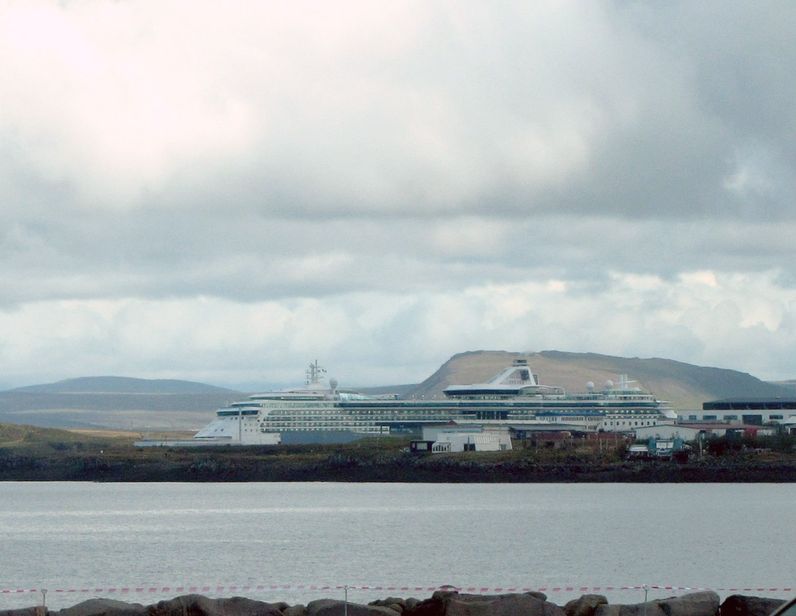
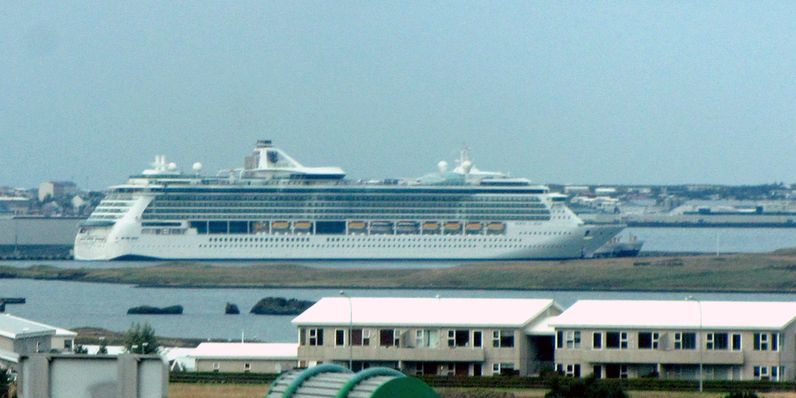
Most ships will use the cruise dock about two miles from the town center. The cruise dock outside the city center offers little to see or do nearby. It does have the Cruise Liner Visitor Centre, which is small but very useful, offering free transportation to the center, money exchange, VAT Tax-Free refunds, computer access, local and long distance phone service, car rentals, a tour booking service and a nice array of duty-free souvenir gifts. Free shuttle buses run frequently between the cruise dock and the center, a 10-minute drive. Cabs also are readily available at the dock and in town at the square in front of the main tourist office. Reykjavik's main sights are easy to cover on foot.
The Cruise Liner Visitor Centre offers computers and is a wi-fi hot spot. Access is also available at the Tourist Information Centre at 2 Adalstraeti, and at all branches of the City Library.
Erupting News: March 2010
- See short video and article about the recent vulcanism near Reykjavik.
- Another
Scientists say history has proved that when the Eyjafjallajokull volcano erupts, Katla follows – the only question is how soon. And Katla, located under the massive Myrdalsjokull icecap, threatens disastrous flooding and explosive blasts when it blows. (http://www.themercury.co.za/index.php?fArticleId=5400939)

Iceland’s Laki volcano erupted in 1783, freeing gases that turned into smog. The smog floated across the Jet Stream, changing weather patterns. Many died from gas poisoning in the British Isles. Crop production fell in western Europe. Famine spread. Some even linked the eruption, which helped fuel famine, to the French Revolution. Painters in the 18th century illustrated fiery sunsets in their works.
The winter of 1784 was also one of the longest and coldest on record in North America. New England reported a record stretch of below-zero temperatures and New Jersey reported record snow accumulation. The Mississippi River also reportedly froze in New Orleans.
…
Unlike the powerful volcanos along the Pacific Rim where the slow rise of magma gives scientists early seismic warnings that an eruption is imminent, Iceland's volcanos are unique in that many erupt under ice sheets with little warning.
… Andy Russell with Newcastle University’s Earth Surface Processes Research Group, who went with a team to Iceland before the eruption. “From records, we know that every time Eyjafjallajokull erupts, Katla has also erupted.”
(http://www.metronews.ca/halifax/live/article/484044?pageno=2)
Katla

Katla MapKatla is one of the largest volcanoes in Iceland and a difficult neighbour. The broad summit is buried under Myrdalsjokull glacier's thick, icy blanket. When Katla starts to simmer, the threat of a powerful eruption under the ice develops. An eruption causes a glacial burst, forcing a vast quantity of melt water out from under the ice. It doesn't last long but the volume of water in the resulting catastrophic flood can reach an average flow rate equal to that of the largest river in the world, the Amazon.
| Temperature | Fahrenheit | Celsius |
|---|---|---|
| Average High | 49° | 11° |
| Average Low | 41° | 6° |
| Mean Temperature | 45° | 7° |
| Humidity | Percentage | |
| Average | 82 | |
| Precipitation | Inches | Centimeters |
| Average Precip. | 3 | 7 |

An entire page on the impossible Icelandic language, with helpful traveler’s phrases.
Webcams
Two downtown cams
Hafnarfjordur
Weather cam
Reykjavik is by far the largest community in Iceland, with a population of about 115,000. Including the neighbouring towns, the capital area has a total population of about 170,000, which is about 60% of Iceland’s population of 300,000 people.
Iceland was settled by Norwegian and Celtic immigrants during the late 9th and 10th centuries A.D. According to the medieval Book of Settlements, Ingolfur Arnarson – the first settler of Iceland – built his farm on the peninsula where Reykjavik stands today. The place was named Reykjavik – “Smoky Bay” – after the columns of steam that rose from the hot springs in the area and made such a profound impression on the original settlers.
Many centuries later, around the middle of the 18th century, a small town started to grow around the farm of Reykjavik, thanks to Royal Treasurer Skuli Magnusson, known as the Father of Reykjavik, who established wool workshops at Reykjavik as part of his efforts to modernise the Icelandic economy. This led to the beginnings of urban development at Reykjavik. Reykjavik received its town charter in 1786.

The Icelandic parliament, Alþingi, was founded in 930 AD at Þingvellir in the southwest. In 1798 the Alþingi was abolished, but in 1845 it was re-established in Reykjavik, where the country’s government and administration were now located. In due course, when Iceland won Home Rule and then independence from Danish rule, Reykjavik became the capital of Iceland. With the rapid economic progress of the 20th century, Reykjavik grew steadily, but developed especially fast in the second half of the century.
For a living view of Reykjavik’s past, visit the open-air Reykjavik City Museum- Arbaejarsafn, located in the eastern part of the capital. The newly opened and innovative Reykjavik 871 +/-2 Settlement Exhibition, located on Adalstraeti in the city centre, allows visitors to view the recently discovered, oldest settlement ruins in Reykjavik and Iceland (possibly those of Ingolfur Arnarson or his descendents), featuring an original Viking age longhouse.
The Reykjavík Capital Area consists of seven municipalities with approximately 200,000 inhabitants, comprising two-thirds of the Icelandic population.
How Safe is Reykjavik, Iceland?
Crime in Reykjavik is basically non-existent, even petty thieves are only rarely seen. Violent crimes? Not here. There are no safety issues concerning drugs or homeless people. The only area in Reykjavik that a single female may not want to visit late at night is Austurvöllur Park - and that's only because it's a popular place for winos, who like to keep to themselves anyway. If you want safety, Reykjavik is the perfect destination for you.
If your schedule allows, you can take advantage of the guided 90-minute walking tours leaving daily at 1 p.m. from May 1 to September 15 from the front of the Tourist Information Center on Adalstraeti. All it will cost you is a tip for the guide.
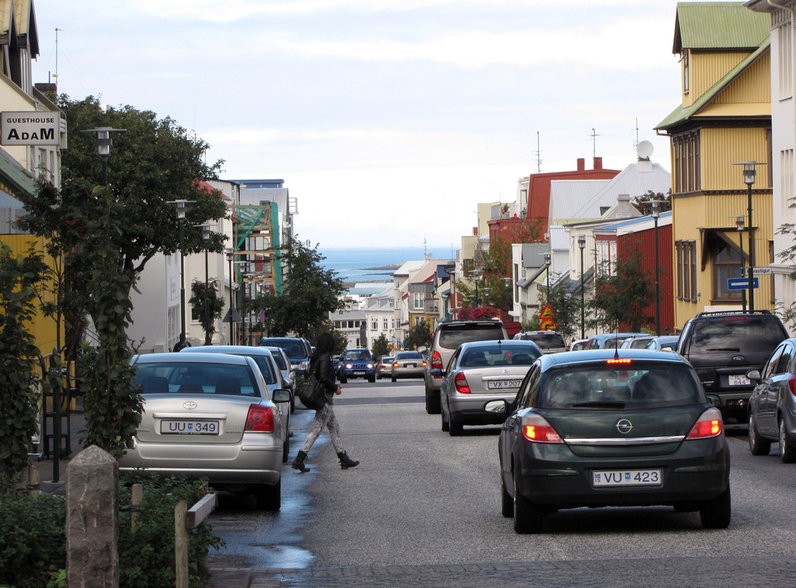
Shopping: Laugavegur and intersecting Skolavordustigur, the main shopping streets, are well worth strolling even if you don't plan on buying anything. The shops display not only the traditional Nordic sweaters but the modern design that is an increasing influence in Reykjavik. As you browse, don't forget to look toward the water at cross streets for striking views and more murals in unexpected places.
Getting Around
Reykjavik is a compact city which is easy to navigate, whether on your own two feet or by public transport. In addition, magnificent countryside awaits just minutes away from the city centre.
You can explore Reykjavik at your own pace or on one of the many organised tours on offer. Do not be afraid to stop and ask for directions, as people are very friendly and almost everyone speaks English. Public transport is good, with a network of buses serving Reykjavik and its suburbs, while taxis are always available.

Visit the Reykjavik Tourist Information Centre for help in planning your activities. Also check out the Reykjavik Tourist Card which offers great value for money, in particular if you plan to use the city busses.
To get the most out of your stroll in the centre, pick up a City Walks Map, that will guide you between the sculptures and artwork, the parks and hidden gardens or explore the historic sites and landmarks. City Walks maps are available at the Tourist Information Centre on Adalstræti 2.
You need not venture beyond the city limits to enjoy unspoiled nature: wooded leisure areas offer peaceful walks on Oskjuhlid hill adjacent to Reykjavik airport, and in the Ellidaardalur valley in the east of the city, to name but two.
Offshore Videy island is a lovely spot, just minutes away by ferry, while only a stone’s throw outside the city is the extensive Heidmork nature reserve, with its splendid volcanic landscape, woods and spectacular views.
Reykjavik Shopping: Where to Shop
The main shopping street in Reykjavik city centre is without doubt the Langavegur, which is brimming with clothing outlets, bookstores, endless gift shops and a good supermarket, along with an array of eateries. Many of the interconnecting alleys and streets, such as the rather chic Skólavödustigur, are also teeming with interesting shops, so do take the time to explore this area thoroughly.
On the eastern side of central Reykjavik and close to the City Theatre, the stylish, award-winning Kringlan Mall is the city’s premier shopping centre and with almost 100 shops spread over two floors, it contains everything that you could possibly need, conveniently all under one roof. So if the weather is a little inclement, this is the place to shop ’til you drop. Alternatively, close by in Kópavogu, part of Greater Reykjavik, the Smáralind is the biggest shopping centre in the whole of Iceland and contains some 80 shops and restaurants, along with a popular cinema.

Blue Lagoon

The Blue Lagoon was formed when the adjacent geothermal energy station started operations. It is a completely unique phenomena. The water is rich in minerals and is used for relaxation, as well as medical purposes. The Blue Lagoon is a 40-minute drive from Reyjavik.
Iceland’s most famous geothermal pool is the country’s top tourist attraction. It might be crowded and expensive but there’s nothing like it in the world. This huge, milky-blue spa is fed by mineral-rich heated seawater from the nearby geothermal plant. Add the silvery towers of the plant, rolling clouds of steam, and people covered in white mud, you’ll think you are in the twilight zone.

The Blue Lagoon geothermal seawater is a part of an ecocycle where nature and science work in harmony. The seawater originates 2000 meter/6562 ft beneath the ground where it is heated by earth’s natural forces. At this depth the temperature is 240°C/464°F and the pressure is 36 times the pressure on the earth’s surface. The geothermal seawater comes into contact with cooling magmatic intrusions and captures the earth’s minerals, resulting in this unique natural source known for its healing power and actives.
The composition of minerals in the water is very distinctive and has a high level of silica. Its environment is characterized by high temperature and salinity level of 2.5% which is 1/3 of the ocean’s salinity level.

What are the changing facilities like? The changing facilities accommodate 700 guests at a time. The six changing rooms are located on the first and the second floor. The men’s and women’s changing rooms on the first floor contain 114 lockers, 13 mirrors and five hairdryers each. Two changing rooms for women and two for men are located on the second floor. The larger women’s changing room has 126 lockers, 5 mirrors and four hairdryers. Private changing cabinets are also on the second floor. The men’s changing room contains 150 lockers, four mirrors and four hairdryers. The smaller changing rooms on the second floor have 106 lockers in the women’s room and 100 lockers in the men’s changing room. Mirrors and hairdryers are located in the hallway in front of the changing rooms. Private changing cabinets where guests can change in private are also in the locker rooms on the second floor.
Travel Links

Gullfoss Waterfall

One of the most famous waterfalls (and major tourist destination) is Gullfoss Waterfall (pictured right). Also known as the Golden Falls, this is where the mighty white river Hvita plunges into a 32 metre narrow canyon. Hailed as one of the most beautiful falls in Iceland, the surrounding area is exceptionally stunning, especially on a sunny day when the hammering falls are wreathed with colourful rainbows! Be careful though – it is advisable not to get too close to the falls, as it tends to spread lots of mists which can leave you soaking wet!


Strokkur, Geysir’s side-kick
You can walk around the world-famous Geysir area, a geothermal field where hot springs are in abundance, geysers explode and pools of mud bubble. The Geysir museum is included as a main feature of this area, an informative multimedia exhibition that vividly shows how the forces of nature shaped the country and the people.
Its alternate, though far less majestic, is Geysirs neighbour Strokkur (translation: piston, cylinder or as most call it “The Churn”), Strokkur only manages to squirt it’s steaming water a meagre 60 to 100 feet about once every five. The Geyser area in south west Iceland is also great to walk, there are many marked walking paths that that lead past steaming vents and colorful, mineral-rich mud formations, plus versions of “hobbit-like” geysers (hot springs) that are fun to see, but be be careful not to wander too close or off the marked paths, the Geysir area can be hazardous.

Strokkur Geyser is one of Iceland’s most famous. It erupts to heights of seventy feet every ten to twenty minutes.
Hafnarfjördur
The picturesque town of Hafnarfjordur, located just a stone’s throw from Reykjavík and within easy reach of Keflavík international airport, has plenty to offer its visitors: nature, art, culture, sports, Viking folklore and of course the huldufólk – the elves and trolls roaming about in the nooks and crannies of the surrounding lava fields.

Hafnarfjördur’s name simply means ‘harbour fjord’ and refers to the excellent natural harbour, which has Iceland’s longest history of continuous port trade – since the 1300s. Hafnarfjördur is Iceland’s third-largest town, with just over 22,000 residents. And yet that number is open to debate, since legend has it that some of Iceland’s elves and hidden people live in Hafnarfjördur’s lava cliffs and rocks, in peaceful coexistence with the town’s human residents. In fact, it is possible to tour the elf lands, and those with second sight may even be lucky enough to spot one or two!
Naturally the town also offers plenty of more conventional outdoor activities, from golf and swimming to horse riding and whale-watching. Museums and galleries turn the spotlight on history, music and visual arts. And every summer hordes of Norsemen invade the town for the annual Viking Festival.
Pictures